Slice of Life - Paris / Hà Nội

How Vietnamese Craft, Coffee, and Memory Quietly Reshape Daily Life in Paris
Paris has long been shaped not only by movements and monuments, but by quieter arrivals — by cultures that settle into everyday life through people, gestures, and repetition rather than proclamation. These cultures do not announce themselves. They are absorbed, slowly, until they feel inevitable.
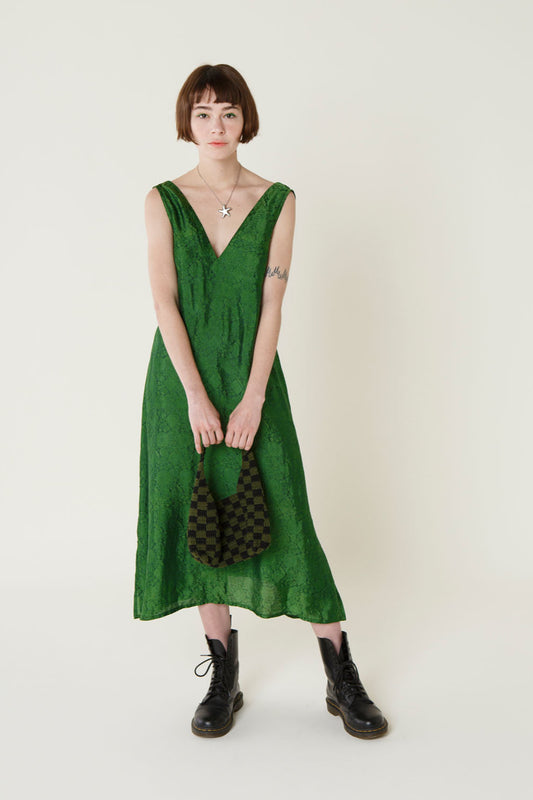
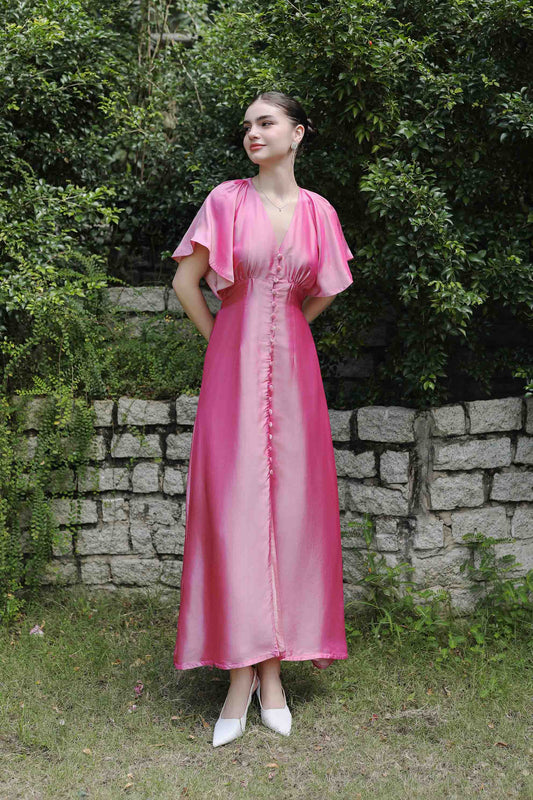
In the Bastille district, on a modest street where people sit low on small stools, waiting patiently as coffee drips through metal filters into condensed milk, Vietnamese culture does not present itself as something to be consumed or decoded. It simply exists. A few kilometers away, in silk garments designed not for spectacle but for movement and ease, the same philosophy unfolds — not as a statement, but as a presence.
Viahe Caphe and gammeCOLLECTIVE are not projects that seek to explain Vietnam to Paris. Instead, they allow fragments of lived experience — taste, texture, memory — to speak for themselves.
A Place Built from Memory
When asked to describe Viahe Caphe in three words, the answer comes without hesitation.
“Authentic, connection, experience,” says Tong.
Mai echoes the same idea, instinctively switching to Vietnamese: “truyền thống, kỷ niệm, kết nối” — tradition, memory, connection.
It is kỷ niệm, memory, that sits at the heart of the café.

The idea for Viahe Caphe was born long before its opening in Bastille. In 2011, Tong traveled to Vietnam for the first time with Mai. Though Vietnamese himself, it was his first real encounter with the country — and with Vietnamese coffee. In Paris, he barely drank coffee. But in Vietnam, the cà phê sữa đá stayed with him.
“From that moment,” Mai recalls, “he kept saying that one day, we would open a Vietnamese café in Paris.”
When Mai first arrived in France in 2009, Vietnamese cafés were almost nonexistent. Years later, opening Viahe Caphe became a way of carrying her memories with her — not as nostalgia, but as something alive.
Her inspiration comes from everyday scenes: street cafés in Vietnam, small plastic stools, long afternoons spent talking with friends. These places were never just about coffee. They were about presence, familiarity, and shared time.
“I knew my life was here now,” she says. “I live here, I work here. But I wanted to bring a part of myself with me. To share those memories.”
Viahe Caphe is not a recreation of the past. It is a translation — a place where memory becomes a lived experience, open to anyone willing to sit down and stay a while.
When Silk Leaves the Realm of Costume
For Han, founder of gammeCOLLECTIVE, the journey began with a similar sense of absence. Vietnamese silk — historically rich, widely produced, and deeply tied to artisanal knowledge — was nearly invisible within contemporary fashion when she arrived in France in 2016.

“I was surprised,” she says. “It’s a noble, natural material, with incredible quality. Yet in Paris, even within fashion, I didn’t see it.”
Rather than positioning silk within traditional or exotic narratives, Han chose a different path — one deliberately distant from cliché.
“Silk often carries a very traditional, almost folkloric image,” she explains. “I wanted to move away from that and show it as a material for everyday life.”
gammeCOLLECTIVE operates between Paris and Hanoi, with garments designed in France and produced in a small atelier in Vietnam. The process is intentionally slow, flexible, and human in scale.
“At the very beginning, I carried the collections myself, in my suitcase, from Hanoi to Paris — just a few pieces at a time,” Han recalls. “Today, the team works across borders, but the scale has intentionally remained human.”
What matters to her is not visual storytelling as an idea, but lived experience.
“I don’t want someone to look at a dress and immediately categorize it as exotic or ‘Asian’,” she explains. “I want the first connection to be instinctive — the silhouette, the way the fabric moves, how it feels on the body. Only after that moment do I want curiosity to arise: Where does this material come from? What is its story?”
Culture That Does Not Need Translation
 What unites Viahe Caphe and gammeCOLLECTIVE is a shared belief: culture does not need to be explained to be understood. It can be felt — through taste, texture, atmosphere — long before it is named.
“Culture doesn’t need to be explained to be felt,” Han says quietly. “It can be transmitted through comfort, through the sensation on the skin.”
Mai expresses the same idea through coffee.
“Many of our clients don’t know Vietnam at all,” she says. “They discover it here — and some even decide to travel there afterwards.”
In both cases, curiosity emerges naturally. There is no didactic narrative, no insistence on meaning. Instead, there is space — for sensation, memory, and personal interpretation.
Beyond Transaction, Toward Familiarity
Over time, Viahe Caphe has evolved into something increasingly rare in Paris: a place defined not by turnover, but by continuity.
“About eighty percent of our clients are regulars,” Tong notes.
Some began as strangers, others as students far from home. Many became friends. Artists who perform in the space were often customers first; drawings on the walls belong to people who once sat quietly at the counter.
“This isn’t a transactional relationship,” Mai says. “People don’t feel alone here.”

For Vietnamese students newly arrived in France, the café functions as a temporary refuge — a space of familiarity within displacement.
“It feels like a safe place,” Tong explains. “A place where you can meet others who understand your situation.”
The same philosophy extends to gammeCOLLECTIVE, where clothing is conceived not as image, but as accompaniment.
“We design pieces that adapt to different bodies, ages, identities,” Han says. “Not the other way around.”
Quiet Resistance to Stereotype
Both projects faced skepticism early on. Vietnamese coffee was underestimated. Vietnamese silk was often perceived as outdated or overly traditional.
“People didn’t even know Vietnam produces coffee,” Tong recalls. “Some looked down on the small stools.”

Instead of responding, they remained consistent.
“We stayed with our vision,” he says. “And slowly, perceptions shifted.”
Han followed the same logic.
“I didn’t want to present silk in a very Vietnamese way,” she explains. “No áo dài, no exotic imagery.”
Time, rather than explanation, became the most persuasive argument.
One Place, One Soul
Neither Viahe Caphe nor gammeCOLLECTIVE seeks replication at scale.
“The soul is here,” Mai says simply. “We don’t want multiple houses.”
Tong agrees. “If we grow, it will be deeper — not wider.”
For Han, this approach reflects a shared philosophy.
“They showed it’s possible,” she says. “Even if it’s niche. Even if it’s not easy.”
The ambition is not expansion, but legitimacy.
“I want Vietnamese silk to be perceived like Italian silk, or cashmere,” Han adds. “Not exotic. Just excellent.”
Culture as Lived Experience

What ultimately connects these two projects is not product, but posture. Neither seeks attention. Neither relies on spectacle. They exist quietly, consistently, until people notice.
A coffee taken slowly.
A silk dress worn without occasion.
A conversation that turns into familiarity.
This is not a cultural display.
It is a cultural presence.
And perhaps this is how culture endures — not by announcing itself, but by becoming part of daily life.
----------------------------
INFORMATION:
Viahe Caphe
Adresse: 16 rue Daval, 75011 PARIS
Instagram: @viahecaphe
gammeCOLLECTIVE:
Address: 16 rue de la fontaine au roi, 75011 PARIS
Instagram: @gammecollective
Website: shop.gammecollective.com